



季節性情動障害
Some people notice it before the calendar does — a heaviness that shows up as the days get shorter, months before anyone says the word "winter" out loud. For most people that's just a mood dip. For a smaller group, it's something more specific and more treatable than "the winter blues" suggests: seasonal affective disorder, a real, recognized form of depression tied directly to the time of year.
What SAD Actually Is
Seasonal affective disorder (SAD) is a pattern of recurrent depressive episodes that show up at the same time each year — most commonly starting in autumn and lifting by spring — with full remission the rest of the year. It's formally diagnosed only when this pattern has repeated for at least two consecutive years in the same season, which distinguishes it from an ordinary rough patch that happens to fall in winter.
Its symptoms overlap with depression generally (low mood, loss of interest, difficulty concentrating) but often show a distinctive winter-specific pattern that's almost the opposite of what people picture when they think "depression": oversleeping rather than insomnia, carbohydrate cravings and weight gain rather than appetite loss, and a heavy, low-energy fatigue rather than restless agitation.
How Common It Is
Estimates vary depending on how strictly it's defined and measured, but SAD's prevalence consistently tracks with latitude: as low as around 1.5% in sunny southern regions, rising toward 9-10% in far-northern areas like New Hampshire or Alaska, with some clinical estimates for high-latitude countries reaching even higher when milder, subclinical "winter blues" are included alongside full diagnostic criteria. Risk factors identified across studies include a family history of the condition, being female, living further from the equator, and — somewhat unexpectedly — younger adulthood, with onset most common between ages 18 and 30.
Why Light Is the Central Clue
The leading explanation is built around one variable that changes predictably every winter regardless of temperature: daylight. Reduced light exposure is believed to disrupt the circadian rhythm covered elsewhere in this wiki, throwing the body's internal clock out of sync with the actual timing of day and night — the "phase-shift hypothesis," currently the leading theory for why SAD develops. Reduced daylight is also linked to shifts in serotonin regulation and to melatonin overproduction, which may help explain the oversleeping and low energy that mark the condition.
A particularly telling piece of evidence comes from research on blindness: one study found a notably higher rate of SAD among people with severe visual impairment than in sighted people, and specifically among those who retained some light perception rather than none at all — pointing to specialized, non-visual light-sensing cells in the retina (distinct from the rods and cones used for actual sight) as part of the mechanism connecting light exposure to mood regulation.
What Actually Helps
Light therapy, daily exposure to a bright artificial light source, typically for a set period in the morning is the best-established, first-line treatment, with a research history stretching back to the 1980s and effectiveness demonstrated against placebo in controlled trials. Cognitive behavioral therapy adapted specifically for SAD and certain antidepressants are also established first-line options, often used alongside light therapy rather than instead of it.
Some commonly suggested add-ons have weaker evidence behind them than people often assume: a major 2020 clinical review noted the evidence for vitamin D supplementation specifically as a SAD treatment remains inconclusive, despite the intuitive link between sunlight and vitamin D. That doesn't rule out a role for vitamin D in general winter wellbeing, covered in more depth in this wiki's own entry on the topic — it just means it isn't yet established as a proven SAD treatment on its own.
How This Differs From General Weather Sensitivity
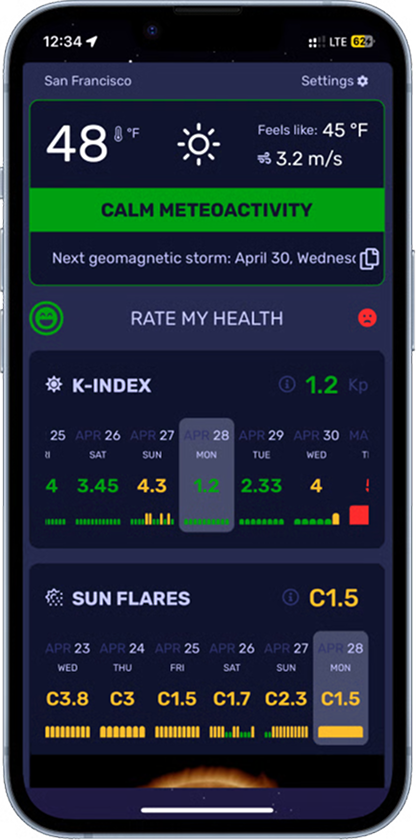
It's worth being clear about the boundary here, since this wiki covers a lot of related but genuinely different territory. SAD is a formally recognized clinical diagnosis with specific criteria, treated by mental health professionals — a different category from the broader, still-developing research on geomagnetic activity, Schumann resonance, or barometric pressure sensitivity covered in this wiki's other entries. If a seasonal low mood pattern is significantly affecting your life, it's worth discussing with a doctor or mental health professional rather than only self-tracking, since effective, well-studied treatment exists specifically for this condition.
季節性情動障害とは何ですか?
季節性情動障害(SAD)は、特定の季節に結びついて繰り返し起こる抑うつエピソードのパターンであり、最も一般的には秋に始まり春までに軽快し、それ以外の時期は完全に寛解します。このパターンが少なくとも2年連続で繰り返された後に正式に診断されます。
季節性情動障害はどのくらい一般的ですか?
有病率は緯度によって異なり、日照に恵まれた南部地域では約1.5%、最北部の地域では9〜10%です。リスク因子には、家族歴、女性であること、赤道から遠い場所に住んでいること、若年成人期(18〜30歳)が含まれます。
季節性情動障害の原因は何ですか?
主要な説は、日照の減少が概日リズムを乱し、体内時計が実際の昼夜のタイミングと同期しなくなるというものです。また、光の減少はセロトニン調節の変化やメラトニンの過剰産生と関連しています。
SADは通常のうつ病とどう違うのですか?
SADは、一般のうつ病と比較して非定型のパターンを示すことがよくあります。不眠ではなく過眠、食欲不振ではなく炭水化物への渇望と体重増加、落ち着かない興奮ではなく強い疲労感などが見られ、それに加えて厳密な季節性の再発パターンを伴います。
SADに光療法は実際に効果がありますか?
はい、光療法は最も確立された第一選択治療であり、1980年代以降の対照試験でプラセボに対する有効性が示されています。専門的治療の代わりではなく、認知行動療法や抗うつ薬と併用されることがよくあります。
ビタミンDは季節性情動障害に役立ちますか?
2020年の大規模な臨床レビューでは、日光との直感的な関連にもかかわらず、ビタミンD補給をSADの特定の治療法として裏付ける証拠は、依然として決定的ではないことが判明しました。それでも、ビタミンDは冬季の健康維持に何らかの役割を果たす可能性がありますが、単独ではSADの確立された治療法とはいえません。
視覚障害者にも季節性情動障害が起こるのはなぜですか?
ある研究では、光の知覚がまったくない視覚障害者よりも、ある程度の光の知覚を保っている視覚障害者のほうがSADの割合が実際に高いことがわかりました。これは、視覚に使われる細胞とは別の、網膜にある特殊な非視覚的光感知細胞が、その仕組みに関与していることを示唆しています。
季節性情動障害は一般的な天候感受性と同じですか?
いいえ。SADは精神医療の専門家によって治療される正式に認められた臨床診断であり、このウィキの別の項目で取り上げられている、地磁気または気圧に関連する天候感受性に関するより広範でまだ発展途上の研究とは区別されます。著しい季節性の気分パターンが見られる場合は、医師に相談する価値があります。