



електромагнітна гіперчутливість
Headaches near a WiFi router. Fatigue after time on the phone. A sense of unease standing under power lines. These experiences are real to the people who have them, genuinely felt and sometimes disruptive to daily life. What's far less settled is the explanation usually attached to them: that modern electromagnetic fields themselves are the cause. It's one of the more carefully studied, and most consistently negative, findings in environmental health research.
What Electromagnetic Hypersensitivity Is
Electromagnetic hypersensitivity (EHS), sometimes called idiopathic environmental intolerance attributed to EMF, describes a pattern of physical symptoms (headaches, fatigue, difficulty concentrating, sleep problems, skin sensations) that people attribute to exposure to electromagnetic fields from everyday sources like WiFi, mobile phones, cell towers, and power lines. It's a genuine, often distressing experience; the open question researchers have spent decades investigating is whether the electromagnetic fields themselves are actually the trigger.
How Researchers Actually Test This
The core method is called a provocation study: people who report EHS are exposed, under double-blind conditions, to either a real electromagnetic field or an inactive sham condition, without either the participant or the researcher knowing which is which during the session. Two things get measured: whether participants can correctly tell which condition they were in, and whether they report more symptoms during real exposure than during sham exposure.
A 2005 systematic review identified 31 such experiments testing 725 people with self-reported EHS. Twenty-four found no evidence supporting real hypersensitivity; of the remaining seven that reported some positive result, two were later re-tested by the same research groups and failed to replicate, three showed signs of statistical artifacts, and the final two produced results that contradicted each other. A follow-up review in 2010 expanded this to 46 double-blind experiments across 1,175 self-reported EHS participants, and reached the same conclusion: no robust evidence that people with EHS could detect real EMF exposure better than chance, and no reliable correlation between actual exposure and symptom reports.
What This Means, and Doesn't Mean
This deserves to be stated plainly, because the research gets misread in both directions. It doesn't mean people with EHS are imagining their symptoms or exaggerating them; the headaches, fatigue, and sleep disruption are genuinely experienced and can meaningfully affect quality of life. What the research indicates instead is that the trigger doesn't appear to be the electromagnetic field itself. In these controlled tests, people reported symptoms just as often during the sham condition as during real exposure, a pattern consistent with a nocebo effect, where the expectation of harm produces real, physical symptoms independent of any actual physical cause. Nocebo effects are a well-documented, broadly studied phenomenon in medicine generally, not a dismissal specific to this condition.
The World Health Organization's position reflects this same balance: EHS symptoms are recognized as real and can be seriously disabling for the people who experience them, but a causal link to electromagnetic field exposure specifically hasn't been established despite substantial research attention.
What Might Actually Be Going On
If the fields themselves aren't the trigger, something is still producing real symptoms, and a few explanations have research support. The nocebo mechanism described above is one. WHO has also pointed to other environmental factors that commonly co-occur with device use and get misattributed to EMF specifically: screen flicker, glare, poor air quality in enclosed spaces with lots of electronics, or noise. Underlying, undiagnosed medical conditions are another possibility worth ruling out with a healthcare provider, since symptoms like chronic headache or fatigue have many possible causes independent of environment.
What is electromagnetic hypersensitivity?
Electromagnetic hypersensitivity (EHS) describes physical symptoms, including headaches, fatigue, concentration problems, and sleep issues, that people attribute to exposure to electromagnetic fields from sources like WiFi, mobile phones, and power lines.
Is electromagnetic hypersensitivity scientifically proven?
Decades of double-blind provocation studies, including reviews covering 46 experiments and over 1,100 participants, have found no reliable evidence that people with EHS can detect real EMF exposure better than chance, or that their symptoms correlate with actual exposure.
Are EHS symptoms real, or are people imagining them?
The symptoms are genuinely experienced and can significantly affect quality of life. The research indicates the electromagnetic field itself likely isn't the trigger, not that the symptoms themselves are imaginary or exaggerated.
What does WHO say about electromagnetic hypersensitivity?
The World Health Organization recognizes EHS symptoms as real and potentially disabling, but states that a causal link between the symptoms and electromagnetic field exposure hasn't been established by the available research.
What might actually cause EHS symptoms if not EMF exposure?
Proposed explanations include the nocebo effect (where expecting harm produces real symptoms), other environmental factors like screen flicker or glare, and underlying medical conditions unrelated to electromagnetic exposure.
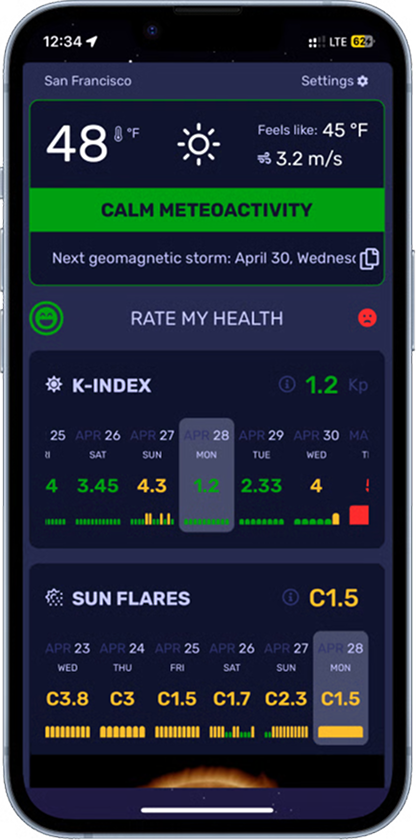
Is EHS the same as sensitivity to geomagnetic storms or Schumann resonance?
No. EHS research concerns artificial electromagnetic sources like WiFi and cell towers, a separate research literature from studies on natural geomagnetic and solar phenomena covered elsewhere in this wiki, which involve different exposure sources and different research methods.